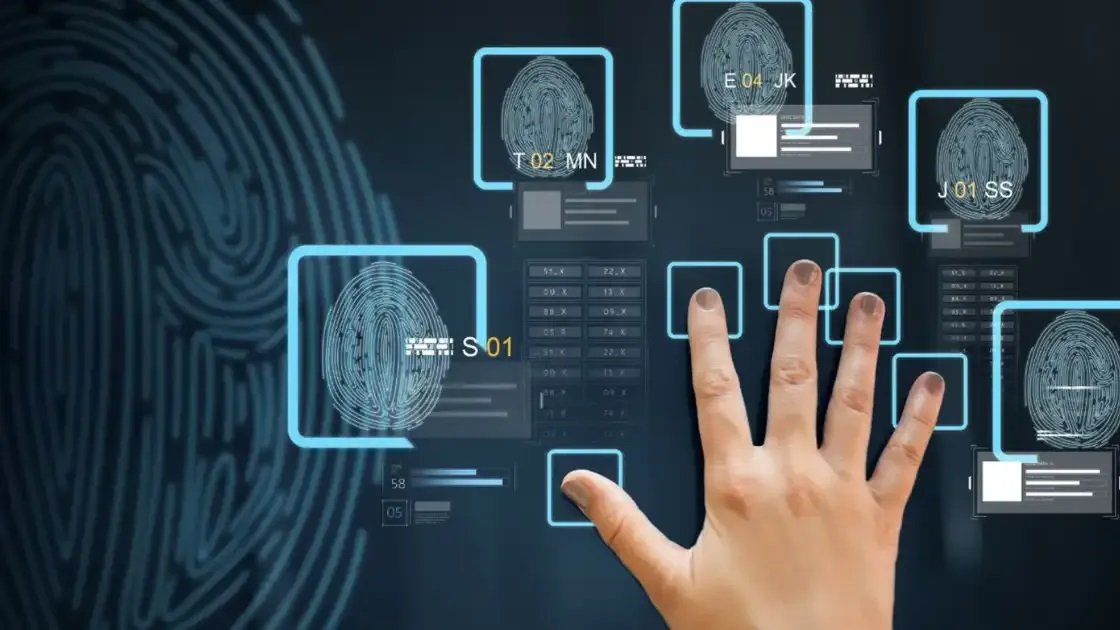
For the past decade, the internet has operated on a quiet assumption—that most of the people behind the screens are real.
Everything else — reviews, followers, engagement, verification badges — has been built on top of that assumption. These signals don’t prove identity; they approximate it. They provide just enough confidence to allow decisions to be made quickly, without requiring deeper verification.
For a long time, that was sufficient.
But that model is beginning to fail. Not because trust no longer matters, but because the conditions that made it possible are changing.
Digital Trust Was Built on Signals, Not Certainty
Modern digital trust is largely inferential. We don’t verify identity directly; instead, we observe behaviour and draw conclusions based on patterns that appear credible.

A high number of positive reviews suggests legitimacy. A large following suggests authority. Consistent posting suggests authenticity. Over time, these signals became a form of shorthand — a way to compress trust into something scalable and easy to interpret.
However, they were always dependent on one critical assumption: that the underlying online identity was human. That dependency, once invisible, is now being exposed.
AI Impersonation Is Reshaping Online Identity
The shift we are experiencing is not limited to content generation. It extends to identity itself.
AI systems can now construct digital identities that are coherent, persistent, and increasingly indistinguishable from real users in everyday interactions. These are not isolated outputs; they are continuous, evolving presences.
These identities can:
- maintain consistent communication patterns
- generate high-quality content at scale
- respond contextually in real time
- build and retain audiences
From a systems perspective, they behave like legitimate users. And this creates a structural problem, because traditional trust mechanisms were designed to measure activity — not to verify identity.
When Activity No Longer Indicates Authenticity
Historically, activity and authenticity were closely aligned. If an account was active, responsive, and consistent, it was generally assumed to be genuine.
That relationship is now weakening.
Today, it is entirely possible to observe high engagement without genuine users, credible-looking reviews without real experiences, and sustained content output without any human involvement. These signals still exist, but they no longer carry the same meaning.
The result is not an immediate breakdown of trust, but a gradual increase in ambiguity. And ambiguity, over time, is corrosive to digital trust.
The Structural Weakness of Social Proof
Social proof continues to operate at scale. In fact, there is more of it than ever before.
However, its reliability is diminishing. The issue is not that signals like reviews or followers are obsolete, but that they are no longer sufficient as standalone indicators of authenticity.
When the cost of generating believable signals approaches zero, their value inevitably declines. What was once difficult to fake is now increasingly easy to simulate.
This is not a failure of social proof as a concept. It is a reflection of the environment it now exists within.
Why Platform Verification Falls Short
Platform-based verification was introduced as a response to uncertainty. In theory, it provides a layer of credibility. In practice, it has clear limitations.
Verification systems are fragmented across platforms, inconsistently applied, and often influenced by visibility or status rather than strict identity validation. More importantly, they are not portable.

A verified identity on one platform does not carry inherent credibility elsewhere. There is no unified standard for identity verification across the internet.
This fragmentation introduces gaps—and those gaps are increasingly being exploited.
Identity Is Becoming the Primary Trust Layer
What we are seeing is not the disappearance of trust, but a shift in where it needs to be established.
Trust is moving closer to identity itself. If identity cannot be reliably verified, then every signal built on top of it becomes less meaningful.
This reframes the problem entirely.
The question is no longer:
“Does this account appear trustworthy?”
It is now:
“Can this online identity be verified as human?”
Defining “Proof of Human”
This is where the concept of proof of human becomes relevant.
At a fundamental level, proof of human refers to the ability to confirm that a digital identity is linked to a real person through a defined identity verification process. It moves beyond inference and replaces assumption with confirmation.
Instead of relying on behavioural signals, it establishes that a human exists behind an identity at a specific point in time.
This does not eliminate the need for social proof. However, it changes its role. Signals become supporting evidence, rather than the foundation of trust.
Who This Affects: Creators, Influencers and Digital Professionals
This shift is not confined to platforms or infrastructure. It directly impacts individuals whose online identity is tied to their reputation.
Creators and influencers are among the most exposed. Their value is built on audience trust — the expectation that the person behind the content is real, consistent, and accountable. As AI impersonation becomes more convincing, that expectation becomes harder to maintain.
Professionals face a similar challenge. Founders, consultants, public figures, and digital professionals increasingly rely on their online identity to establish credibility. Whether it is attracting clients, building partnerships, or maintaining authority within a field, trust is central to their success.
Even outside of high-visibility roles, anyone building a recognised presence online is affected. The more an individual depends on being perceived as real and trustworthy, the more significant this shift becomes.
As uncertainty around identity increases, credibility becomes harder to signal and easier to question. This is where identity verification moves from being a technical feature to a practical necessity.
The Emergence of Verifiable Identity Systems
We are beginning to see early responses to this shift.
Rather than attempting to refine behavioural signals indefinitely, some systems are introducing independent identity verification layers. These systems aim to establish trust at the identity level, rather than relying solely on activity-based indicators.
For example, platforms such as https://prven.org are exploring how individuals can anchor their online identity to a verifiable human record — one that exists independently of any single platform.
In practice, this can take the form of a publicly accessible verification record, confirming that a real person completed a verification process at a specific point in time.
This introduces something that traditional trust signals lack: a reference point that can be checked, rather than assumed.
Implications for Businesses and Platforms
The impact of this shift extends far beyond individual users.
Any system that relies on digital identity is affected, including e-commerce platforms, SaaS products, social networks, creator ecosystems, and review-driven marketplaces.
Without reliable identity verification, it becomes increasingly difficult to assess credibility, prevent fraud, maintain user trust, and ensure the integrity of interactions.
As AI impersonation continues to evolve, these challenges will only become more pronounced.
The Next Phase of Digital Infrastructure
The internet has evolved in layers.
- Access enabled participation.
- Content enabled expression.
- Social platforms enabled connection.
- Trust signals enabled scale.
The next layer is identity verification.
Not as a rigid or centralised system, but as a flexible layer that allows authenticity to be confirmed when required. This approach introduces accountability without removing the openness that made the internet valuable in the first place.
A Shift From Assumption to Verification
For years, the internet has operated on assumed identity. That assumption is becoming increasingly difficult to sustain.
We are now moving toward a model where identity verification becomes necessary — not for every interaction, but for those where trust truly matters.
This does not eliminate anonymity. Instead, it introduces the ability to verify authenticity when needed.
Where This Leaves Digital Trust
Social proof will continue to play a role. People will still look at reviews, followers, and engagement when forming opinions.
However, these signals are no longer sufficient on their own. They require a stronger foundation.
Without identity verification, they become easier to simulate and harder to trust.
The internet is not losing trust.
It is losing confidence in what is real.
And in a system built on interaction between unknown parties, that distinction matters more than anything else.